Exploring the impact of broadband and technology on our lives, our businesses, and our communities.
Now dishwashers need WiFi to work
Now dishwashers require WiFi to work. This should be against the law. It's certainly against common sense. My wife bought a Sonos boombox a couple of years ago, and the first time we turned it on I discovered that you had to download an app to control the volume. It went back in the box and back to the store. A dishwasher, once you have installed it, has a higher time cost to box it back up and return it.
The point of the story is that if you are buying large or small appliances, read the fine print before you buy. And the dreaded 10 mm socket also makes an appearance in this horror story.
Technology News:
Knowledge Democracy:
Starlink is not a one size fits all solution for rural households
There is much discussion at the Federal level about modifying the BEAD (Broadband Equity, Access, and Deployment) Federal funding program. One idea being floated is to allow Starlink satellite broadband as a solution; the current BEAD requirements strongly favor fiber. Other ideas being discussed include softening or eliminating some of the regulatory requirements.
Some of the BEAD regulations are could benefit from modification, particularly the prevailing wage requirement, which substantially increases the cost of construction by requiring union pay levels.
Including Starlink is a mixed bag. Starlink availability has already reached saturation (i.e. Can't add more customers because of capacity issues) in some U.S. areas. Starlink continues to add satellites, but there are unconfirmed reports that more Starlink satellites are falling out of the sky faster than Starlink can add new ones (atmospheric drag in LEO is an issue).
Starlink is far better than DSL in remote rural areas, but the idea that consigning all rural households to Starlink "solves" the rural broadband problem is pernicious. Starlink bandwidth, like any RF-based wireless, is variable and may not support work from home, which will continue to be important to many rural households.
Technology News:
When will the AI bubble burst?

AI is creating a huge investment bubble that will eventually have to burst. Part of the problem is that there is not "intelligent" about AI. They are LLM (Large Language Model) software programs that are nothing more than sophisticated statistical models. They use massive computational processing to predict what word or words should come next in a sentence. There is no thinking involved. And it's a classical case of GIGO (Garbage In, Garbage Out)--a long-standing computer phrase meaning that if you feed a program bad data, you get bad data out. Most (all?) AI programs are being fed massive amounts of data vacuumed off the Internet, and we all know the Internet is 100% reliable.
Properly managed, these "AI" tools can be very useful, but this is an investment land rush that does not encourage thoughtful and careful development.
Technology News:
Fiber in water pipes is not likely to be popular

Everything new is old again. A company called Aqualinq is proposing to run fiber cable through water pipes. It is not really a new idea.
The idea of putting fiber in sewer pipes is at least fifteen years old. I talked to numerous public works people then, and they were emphatic that they would not allow it. It was used in some cities in Europe successfully because they had older, larger sewer systems where the fiber could be attached to the ceiling well above normal sewer flows. It never caught on in the U.S.
There may be some limited applications for putting fiber in water systems. The article mentions getting under railroad crossings, crossing highways, and crossing creeks and rivers. These are usually more expensive when doing traditional underground or aerial fiber, so if there is a water pipe in the right place, that could save money. But this is not going to "unlock the flood gates for faster fiber deployment."
Technology News:
The Scourge of Live Chat

Many companies, mostly larger ones but also some smaller ones, now offer live chat. It's the most soul-devouring time waster, and I groan every time I just want some simple pricing or product detail. It is obvious most chat is outsourced to a chat farm. The people you end up talking to typically just have a script of common questions and answers, and often can't provide much more than "I'll take your name and email and have someone get back to you."
My biggest gripe is the slow pace of "live chat." The staff responding must have to keep, by my guess, at least four to six chat sessions running simultaneously, because you type a response, then wait. And wait. And wait some more.
If you try to check your email or do some other work and accidentally cover up the chat window, you might miss the response, or forget to keep checking, and the chat is disconnected. Now you have to start all over again.
It's awful.
Technology News:
YouTube now costs as much as cable TV

YouTube has announced a price hike> for their streaming TV service to $83/month.
This is now as much a a traditional package of cable TV programming. YouTube offers a wide variety of streaming channels, some of which are hard to get on some other streaming packages (e.g. local traditional TV channels), but this seems high. Business must be good enough that they think they can jack up prices this much. I'm so old I can remember when YouTube TV was available for $49/month.
Technology News:
Knowledge Democracy:
Yet another "muni broadband doesn't work" story
The incumbents never sleep, and they rarely stop opposing competition, especially if the competition is a local or regional government broadband initiative. The Community Networks Web site has an excellent article on all the problems with a recently released report by the ITIF (Information Technology and Innovation Foundation).
The article samples a small handful (twenty) of an estimate of nearly 500 community and local/regional government broadband projects and uses some rather weak statistics to "prove" community broadband is a bad idea.
What is disappointing about the continual assault on competitive broadband networks is that the big incumbents have been the beneficiaries of billions of tax dollars via the Universal Service Fund, RDOF grants, and other tax-supported subsidies, but have not delivered affordable, high performance broadband to many homes and businesses in the U.S.
Some of the best work is being done by smaller telephone coops and companies, who seem to understand taking care of their customers is just good business.
Technology News:
Starlink is running out of capacity

Starlink has indicated that it has run out of satellite capacity in certain parts of the U.S. While they continue to launch additional satellites, the physics of radio frequencies will always be a binding constraint on terrestial, LEO, and geosynchronous wireless broadband networks. The upper limit on fiber cable bandwidth has still not been found.
Technology News:
Broadband Information:
Computers and tablets in the classroom are a mistake

I am glad to see there is finally some research becoming available that is looking at the impact of having students use computers and tablets in the classroom. The verdict is that it has been a disaster.
Aside from studies that show making written notes improves retention, the machines are a distraction...if you are fiddling with your laptop or tablet you are not paying attention. Learning outcomes have plummeted since the introduction of digital technology in the classroom.
Many classical and charter schools have already figured out that traditional teaching methods (paper textbooks, whiteboards, written notes) gives much better results. Let's hope this new research accelerates the return of the old ways.
Technology News:
Knowledge Democracy:
AI is going to solve the energy crisis
It is easy to find articles bemoaning the fact that the energy used by AI to process queries and to provide answers is using many times the energy needed to process a simple search engine query. Some of these articles talk about the inadequacy of the current electric grid to handle the increased data center load.
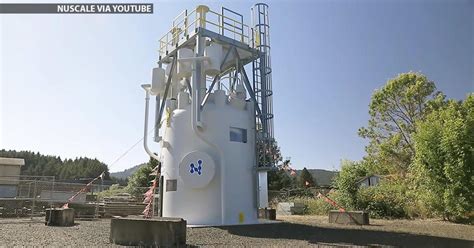
All true. But the search engine companies (e.g. Microsoft, Google, others) are recognizing that nuclear power is the solution. And in particular, small modular reactors (SMR) and microreactors are going to be a big part of the solution. Have a huge data center with increasing power demands from AI? Drop a small modular reactor right next to the data center--problem solved. Need more power? Drop a second small modular reactor next to the data center.
These small modular reactors and microreactors can be manufactured in a plant and trucked to the site, unlike the hugely expensive purpose-built reactors that have been built in the past seventy-five years. Nuclear is clean energy, and the SMRs have very large safety margins that make them safer than traditional reactors. Think of them as extremely efficient batteries that can generate power for years before needing to be recharged with new fuel.
Technology News:
Pages
