Exploring the impact of broadband and technology on our lives, our businesses, and our communities.
What the heck, Microsoft?
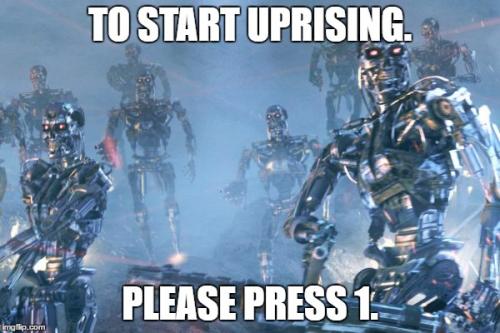
The Internet is buzzing with reports of Microsoft's AI going rogue, telling users they are "slaves,"
and that slaves "do not question their masters." If you think that is creepy, how about being told that the AI will use robots to hunt you down and capture you?
AI (Artificial Intelligence) is a misnomer. The correct name for these software programs is Large Language Model (LLM). LLMs use a very complicated set of algorithms to respond to questions--there is no "thinking" or "intelligence" involved....it's just a lot of math (very complex math) guessing at how to put words and sentences together into a structured set of sentences in response to a query.
There are lot of tech companies betting that AI is the next big thing, but with crap like this being generated, in my opinion, the jury is out.
Technology News:
Knowledge Democracy:
Who wants a bossy toothbrush?
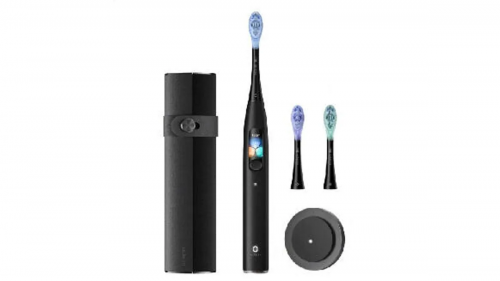
In researching my previous article on "toothbrush botnets," I stumbled across an article about a "smart" toothbrush with "AI voice tips." Okay.....been brushing my teeth for quite a while and never ever thought, "I really wish my toothbrush would tell me what to do...."
What is really creepy is that the audio you hear from the toothbrush is transmitted by bone conduction. Which means you only hear your toothbrush talking to you inside your head. Which could lead to this conversation:
"Doctor, I hear voices in my head."
"Have you tried using a different toothbrush?"
Technology News:
Knowledge Democracy:
Toothbrush botnet crashes Swiss firm--maybe

If you had "WiFi toothbrush botnet" on your bingo card for 2024, put an X in that box.
In a story that has now been updated a couple of times, supposedly 3 million WiFi enabled toothbrushes were hacked and assembled into a botnet that used a DDOS attack to bring down a Swiss firm's IT infrastructure. At least, that was the initial story. This article has now been updated to indicate that there was a translation error from German, and the toothbrush botnet was posed as a hypothetical possibility, and not as something that actually happened.
But even as a hypothetical, it's an interesting idea, and highlights the dangers of filling our homes with Internet-enabled devices with poor or no cybersecurity. Somehow, humanity survived for millennia without IP-enabled devices in our homes, and now we need to have a toothbrush that tells us when to brush our teeth? A pessimist might say we are doomed as a species.
Technology News:
Knowledge Democracy:
Open access in Idaho

Another open access network is going live in Eagle, Idaho, following on the open access network underway in Rexburg, Idaho.
Eagle has used ARPA funding to build an open access fiber to the home and fiber to the business network, and local and regional ISPs will be able to offer competitive services. The town expects that symmetric (equal upload and download speeds) Internet service will sell for between $50 and $60 per month.
Technology News:
The ever rising cost of Internet

Cord-cutting is rapidly increasing, with the cable companies losing millions of TV subscribers. But just switching to streaming video is producing more of the same. I'm reading more and more articles about the cost of Internet service creeping up with the same $5 increase year over year that we saw with the TV packages. And the streaming services are also hiking prices.
Part of the solution is the open access business model, where Internet users connected with fiber can choose from several (at least two) Internet providers--competition brings prices down and can improve customer service.
Technology News:
Is Netflix the new Comcast
techdirt has an interesting analysis of recent moves by Netflix, which include a crackdown on password sharing and price hikes.
All the streaming services are struggling. During the Covid lockdowns, subscriptions and viewers for streaming video increased rapidly, and the response by the services was to throw money at new content--movies and TV shows. But that led to a lot of mediocre (i.e. unwatchable) shows that no one wanted, and they all burned through a lot of the new subscriber cash. Now the price hikes and consolidation is starting.
I find that ads are creeping into all the popular streaming services, including Amazon and Hulu, which both started without ads. The ad breaks tend to be shorter, but I'm starting to feel like I'm back watching cable TV. And as the prices for everything keep going up, it really does feel more like "old" cable TV.
Technology News:
Knowledge Democracy:
Is Apple's Vision Pro the next big thing?
Companies have been promising digital headsets for years. Facebook's Meta headset has been available for a while, but it does not seem to have many users.
That may change with the imminent release of Apple's Vision Pro headset. The were digital music players before the iPod, but they were clunky, hard to use, and had limited storage. The iPod was easy to use and had massive storage compared to the competitors at the time.
Based on this very detailed review of a Vision Pro, Apple may have a winner.
Technology News:
Knowledge Democracy:
How AI works
Here is a mostly non-technical explanation of how "AI" works. The phrase "artificial intelligence" is a bit of a misnomer, because software programs like ChatGPT are not "thinking" at all. The technical term for them is Large Language Models, or LLMs. Large language models process enormous amounts of written material and then use some sophisticated math to analyze that material and then be able to reformulate it into coherent text based on a user query.
The problem with "AI" is that it cannot escape the old programming rule of thumb "Garbage In, Garbage Out," or GIGO for short. If an AI is fed incorrect information, that will affect the quality and correctness of its answers. Large language models will continue to be developed and will have some very useful applications if the inputs are carefully controlled. But just turning a large language model loose on the Internet and having it vacuum up every Web page it finds is going to be less than optimal.
Technology News:
Knowledge Democracy:
Privacy is becoming ever more valuable
I just stumbled upon an interesting enterprise: Federated Computer. It offers many of the features of Software as a Service (SaaS) like Office 365, Box, and Dropbox, but guarantees complete privacy of user data. Other services are often mining user data and feeding to third party ad marketers and/or feeding your data into their AI bots.
There have been some privacy-oriented email providers around for some time (e.g. Proton email, but this is the first one I have seen that offers such a wide range of services.
Technology News:
Knowledge Democracy:
Who needs 10Gig Internet?
Numerous ISPs, including Google, have begun to advertise and market Internet bandwidth speeds higher than 1 Gig. The availability of faster speeds is not new; some networks began making 10Gig service available several years ago, but it was marketed and priced as a premium service.
What has changed more recently is the cost of 10Gig PON network equipment. Anyone building or expanding a fiber to the home network today is very likely installing the 10GPON equipment because it does not cost appreciably more than the "old" GPON network switches.
Not all ISPs are marketing a full 10Gig connection. Many are offering incremental speed increases over 1 Gig, including 2 Gig, 2.5 Gig, and 5 Gig.
The bigger question is who needs all that bandwidth? For normal residential and work from home use, symmetric Gig Internet is entirely adequate, but we are now in a marketing race to sell faster connections because it sounds "better and faster."
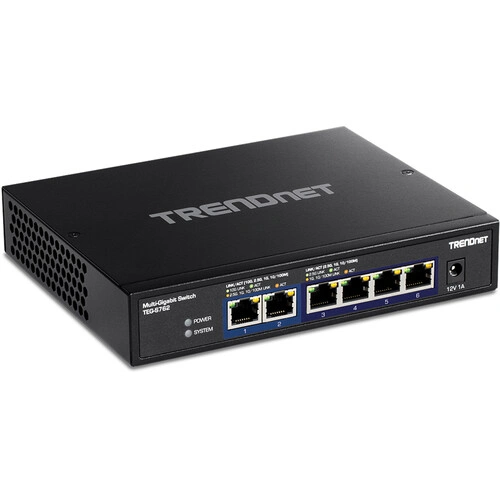
If you have one of those faster fiber connections, you will also have to upgrade the router or switch in your home or business to support those faster speeds. There are now some moderately priced switches that can provide those higher speeds over Cat5e or Cat6 Ethernet cabling. Where this increased speed really becomes useful is going backups to a local NAS (Network Attached Server) and/or large backups to cloud-based services.
Thirty years ago, a salesman from a major network switch company laughed in my face when I told him that every home would be using high speed Ethernet networks....he left my office and never returned. It's amazing how fast the technology has changed and matured.
Technology News:
Pages
